Setting the standard for operational excellence

Your organisation
is capable of more
than it shows.Operational Excellence through Lean and OEE — operations improvement that sticks, across industries.

Your people are already doing their best — yet the same problems keep coming back. We find what is really holding you back and rebuild it, so the improvement stays in place.

The same advisor from start to finish.
We build the systems side by side with you.
The Ownership Curve — from us to you

We build systems,
not dependency.

The M-B-E-A model is designed for one thing: transferring ownership to your organisation. We don’t measure success by what we do while we’re there — but by what still works after we’ve left.

  1. M

    Map

    We find the truth in your operations.

  2. B

    Build

    We design the system, the ownership and the routines.

  3. E

    Execute

    We implement side by side and shift the habits.

  4. A

    Anchor

    Operations run without us.

See the full method
Self-sustaining operations
Prozanta involvement

Anchored — by phase A, operations run without us.

Schematic illustration of the model — not a measured result.

Our core conviction

Operational problems are usually behavioural problems. The system shapes the behaviour.

Knowledge Base

The thinking behind the work.

See all articles
ISO 9001

ISO 9001:2026 — Are your operations ready for the new standard?

The new revision tightens the requirements for operational resilience, strategic quality management and ESG integration. The standard is expected to be published in September 2026. Preparation starts now.

Read more about the transition
Where it applies

The same pattern — regardless of industry.

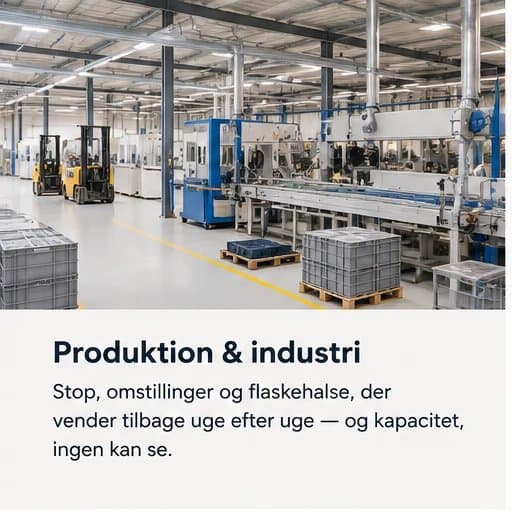
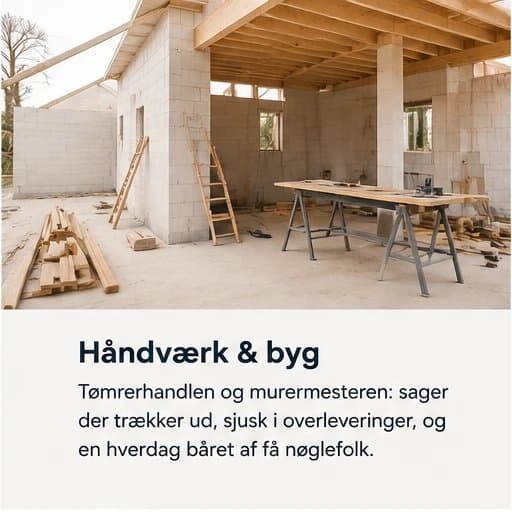
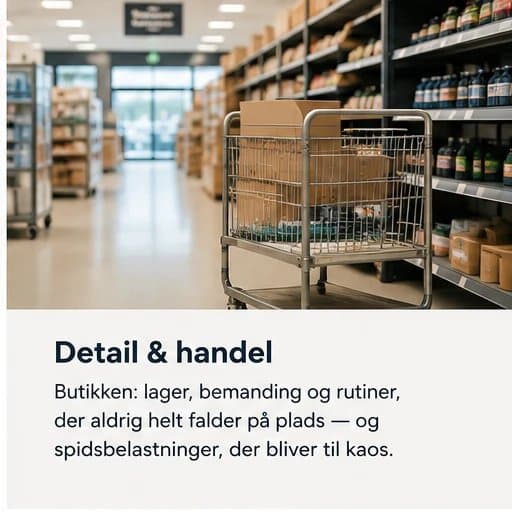
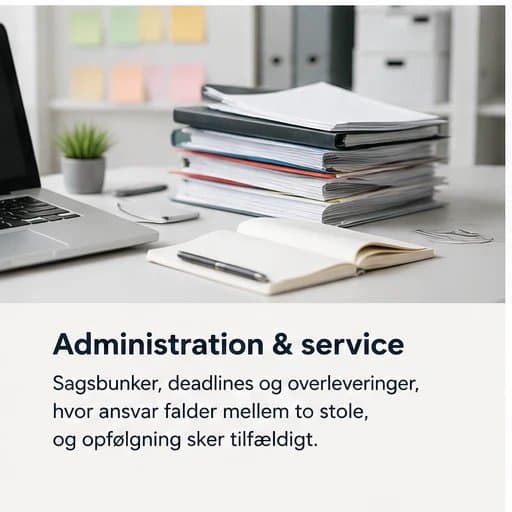
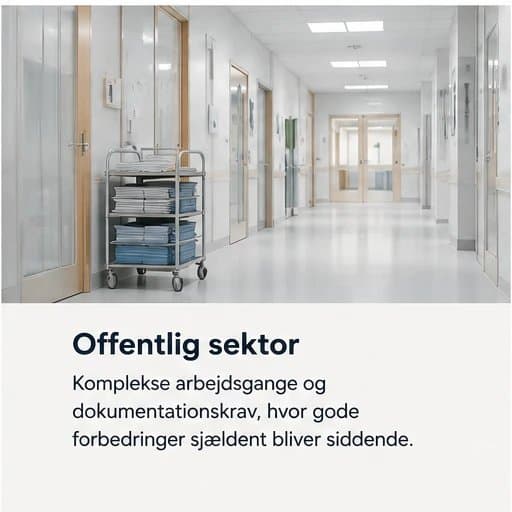
Manufacturing, trades, retail, administration or the public sector — we see the same patterns everywhere: the same problems return, operations depend on a few key people, and improvements don’t last. The challenge is rarely the craft. It’s the system and the habits around the work.

The methods have been hardened in some of the most demanding operating environments there are — grounded in Lean and Six Sigma. That is exactly why they hold up just as well in the office, in the shop, on site and in public administration.

What does it move?

Documented effects — not promises

We don’t publish client cases — discretion is a principle. The effect of the methods, however, is well documented in the literature. These figures show what systematic work typically moves when it is executed and anchored correctly.

−50–90%

Changeover time with SMED

Systematic changeover reduction typically moves changeovers from hours to minutes — freeing capacity without new machinery.

Shingo, A Revolution in Manufacturing (1985)

60 → 85%

OEE: from typical to world class

Many plants sit around 60% OEE; world class is defined at 85%. The gap is hidden capacity that has already been paid for.

Nakajima, Introduction to TPM (1988)

5–15×

Lead time vs. processing time

Value stream analyses typically show total lead time at 5-15 times the pure processing time — the rest is waiting time that can be removed.

Rother & Shook, Learning to See (1998)

94%

Of problems live in the system

The vast majority of operational problems stem from the system and its structures — not the employees. That is why system improvement works where blaming individuals fails.

Deming, Out of the Crisis (1986)

Results depend on the starting point and the anchoring — no serious advisor guarantees a number. But the direction and the order of magnitude are well documented, and the sources can be verified.

Who we work best with

Is this for you?

We are not the right fit for everyone — nor should we be. We work best with mid-sized companies, typically 30–250 employees, where the potential is real but the day-to-day stands in the way of realising it. Here is when we are the right match — and when we are not.

This is built for you, if…

  • You are an established business where operations have grown faster than the structure around them.
  • The same problems keep coming back — stoppages, errors, delays and handovers that slip.
  • Management spends too much time firefighting and too little time getting ahead.
  • You may have tried a programme before that looked good on paper but didn’t stick.

We are probably not the right fit, if…

  • You are looking for a quick report — not a lasting change in the day-to-day itself.
  • You want a consultant to take over your operations, rather than building you up to run them yourselves.
  • You are in an acute crisis that calls for a turnaround here and now.

By saying it up front, we save you the time — and ourselves an engagement that wouldn’t have lasted anyway.

Our discipline

We turn improvements into new habits.

Almost anyone can find what ought to be improved. The hard part — and the part that decides everything — is making the change stick when the day-to-day presses in. That is the discipline we have made our own: moving an organisation up in operational maturity by building ownership, habits and firm management routines into the operation — so the improvement lives on, even after we have left. Strategy is easy to approve. We stay until it works without us.

Why Prozanta

Why Prozanta was founded.

Most organisations hold far more capability than their day-to-day allows them to show. The capacity is there. The talent is there. What is missing is the structure that lets it come into its own.

Prozanta was founded on the conviction that stable operations set people free. When ownership is clear and routines hold on their own, capable people no longer spend their energy holding the day together — they spend it making things better.

Our job is to build that structure together with you and make your organisation able to carry it forward on its own. The goal is not that you need us. The goal is that you don’t.

Credentials · Henrik Petersen

12 years in regulated manufacturing

Lean Manufacturing

LEAN

Lean Master

Black Belt

DMAIC · DFSS

Six Sigma

Black Belt

Quality Management

ISO

ISO 9001

Certified Auditor

Failure Probability

FMEA

Risk Analysis

AIAG & VDA

The methods are recognised and well documented — hardened in some of the most demanding operating environments there are. What matters is that they are used properly, where the work actually happens — whether that is in the office, in the shop or on site.

Does this sound familiar?

Most leaders recognise at least one of these patterns.

01

The same problems return week after week.

02

Operations depend on certain key people.

03

Meetings don’t lead to action.

04

KPIs are measured, but no one follows up.

05

Too many tasks become urgent tasks.

06

Responsibility falls between two stools.

07

Decisions take too long.

08

Firefighting takes up more room than improvement.

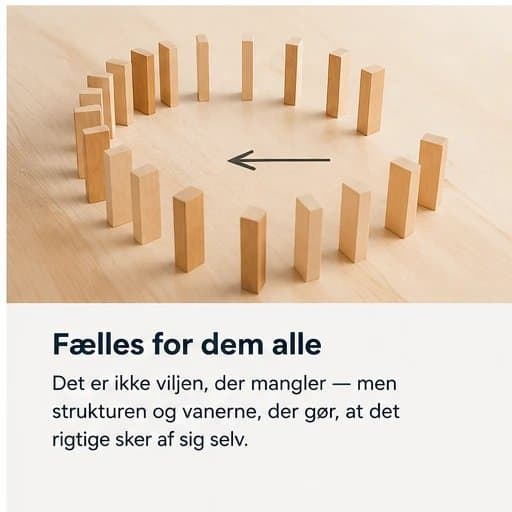
The patterns repeat — and they share the same cause: it is not the will that is missing, but the structure and habits around the work. The system shapes the behaviour, and that is where the improvement begins.

When does Prozanta make sense?

  • The same problems keep coming back
  • Too much depends on individual people
  • Management spends more time firefighting than developing
  • Improvements don’t last
  • KPIs don’t change behaviour
  • Growth is outpacing the organisation’s systems

If you nod to three or more, there is probably more to gain than you think.

Have a no-obligation conversation
The core of what we do

We make daily operations predictable.

Fixed, short meetings. Visible ownership. Problems that are found and solved once. Daily Management and stable operations are the foundation for everything else.

From firefighting to continuous improvement

Firefighting

Typical start

Reactive

Structured

Proactive

Goal

Continuous improvement

We move you one step at a time.

0%

85% is world-class OEE. Many manufacturers run at around 60% — the difference is hidden capacity you are already paying for in wages, machinery and time.

Source: S. Nakajima, Introduction to TPM (1988) — the established OEE benchmark.

Manufacturing

The day opens with a 15-minute board meeting: yesterday’s output against plan, the night’s stoppages, today’s bottleneck. Every deviation gets an owner and a deadline straight away. OEE is tracked with numbers — not gut feeling — and a CAPA routine ensures the same stoppage doesn’t return next week.

Administration

Same rhythm, different numbers. A short daily review of the case backlog, deadlines and handovers makes the bottlenecks visible before they become delays. Responsibility is tied to names, not departments — and follow-up happens on schedule, not when someone happens to remember.

“A presentation changes nothing by itself. The change happens in the execution.”

We stay until it runs without us.

What we do

  • Are present out where the work happens, and drive the implementation together with you
  • Hold firm, even when it gets hard
  • Build your own ability to carry the improvement forward

What you do

  • Own the change and set the direction
  • Prioritise it and drive it in the day-to-day
  • We make you able to do it — but we don’t carry it for you

The change is driven by your own organisation. We train and support, so you can continue on your own when the engagement ends.

1

Fixed price per phase

You know the price from the start.

2

Anchoring check after 3 months

We come back and verify that the improvement is still running.

3

Anchoring scorecard

You get a tool to verify that it is still running after we have left.

We don’t showcase our clients.

We don’t publish names, logos or cases. What we do at one company stays with that company. Discretion is part of what we deliver — and the most important proof is not someone else’s story, but what we find when we look at your operations.

Confidentiality as standard

Names, logos and cases never leave your company.

No references for show

We don’t build our sales on other people’s results.

The proof is your own operation

The most important evidence is what we find in your numbers.

So judge us on what you can verify for yourselves: our thinking, our tools and what we find in your own operations — rather than someone else’s story.

Part of the craft

We share our thinking openly.

You don’t have to take our word for it. Use our tools and guides, and judge for yourselves whether we understand your day-to-day.

New · The OEE Index

How does your production compare with the rest of the industry?

An open benchmark collecting anonymous OEE figures from manufacturers — real-world numbers rather than a textbook figure from 1988. Contribute anonymously and see where you stand.

The benchmark
World class85%
Typical level~60%

median figures per industry appear on the index as more contribute.

Stable operations reach into several other areas:

How we work together

Fixed price per phase. You decide after each one.

We work in phases at a fixed price, agreed before we start. You only commit to one phase at a time and decide for yourselves whether to continue. No open-ended invoicing, no surprises.

MMap

A scoped potential audit at a fixed price. You get a clear picture of what there is to gain.

You own the result — no matter what
BBuild

Once the audit has shown the scope, we give you a fixed quote for the next phase.

Fixed price, agreed up front
EExecute

We implement side by side until the improvement sits in the day-to-day.

You decide after every phase
AAnchor

We verify that the improvement is still running — three months on as well.

Included

You only pay for one phase at a time.

What does it cost?

The price depends on the scope of the task — which is why we don’t set it up front. The potential audit does that: it gives you a clear picture of what there is to gain and forms the basis for a fixed quote you can consider before anything is decided.

Book a clarification call
Frequently asked questions

Stable operations, anchoring and fixed pricing — explained briefly.

What is Operational Excellence — and how does it differ from ordinary Lean?

Lean is a collection of methods (VSM, 5S, SMED and so on), while Operational Excellence is about making stable operations the norm — even after the consultant has gone home. We use the Lean and OEE tools, but anchor them in management behaviour and daily routines so the improvements last.

How do you measure how much capacity is being lost?

We map your value stream (VSM) and measure OEE — availability, performance and quality — so the real loss drivers become visible. You can get a first overview with our free OEE and downtime calculator.

What is Daily Management, and why does it work?

Daily Management is a structured daily routine where deviations become visible and are dealt with immediately — from the floor to management via board meetings. It works because it changes behaviour every day, not just during a project.

How long before we see results?

The first loss drivers typically become visible within the first weeks. Lasting results depend on anchoring — which is why we build the systems together with your own organisation, so they carry the operation after we have left.

Do you only work with manufacturing companies?

Our core is regulated manufacturing and industry, but the Lean and Operational Excellence principles also work in administration and logistics — with adaptation. We have experience with both.

What does an engagement cost?

It depends on scope and goals. We always start with a no-obligation clarification call, where we map your situation and tell you honestly whether and how we can help — before any plan is made.

Let’s uncover where there is most to gain.

A no-obligation conversation. We map your situation and tell you honestly whether we can help.